
The exhibition “Belkıs Hanım and Onur Efendi” revolves around the identity of an “intellectual” that emerged with the process of modernization, and the turbulent states of mind that it brought about. In this exhibition Onur Gökmen and I questioned a term that we coined “the fragility of Turkish intelligentsia.” We chose Osman Hamdi Bey as the prototype of the Turkish intellectual, an ideal that formed in times that can be considered as the late-modernity. Osman Hamdi Bey, an aristocrat, an artist, an archeology enthusiast and finally a bureaucrat, formed the first cultural institutions that take after their western equivalents, the first museum, the first art school. The method of the formation of the institutions (modeling them after western ones) created a pattern for constant comparison in the coming generations.
Belkıs Hanım and Onur Efendi, an exhibition conceived as a collaboration with Onur Gökmen with a video and 9 sculptures, opened in November 2021 at SALT Galata with the support of SAHA and SALT.
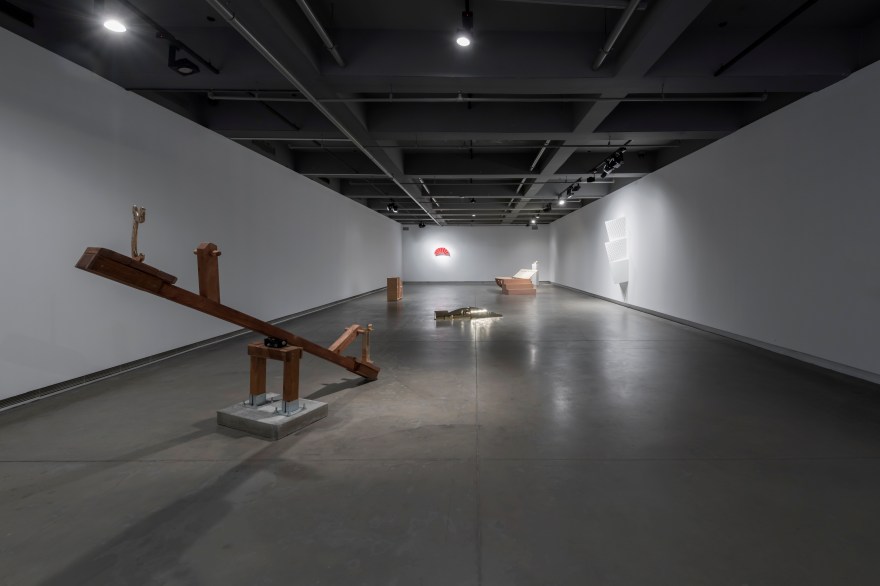

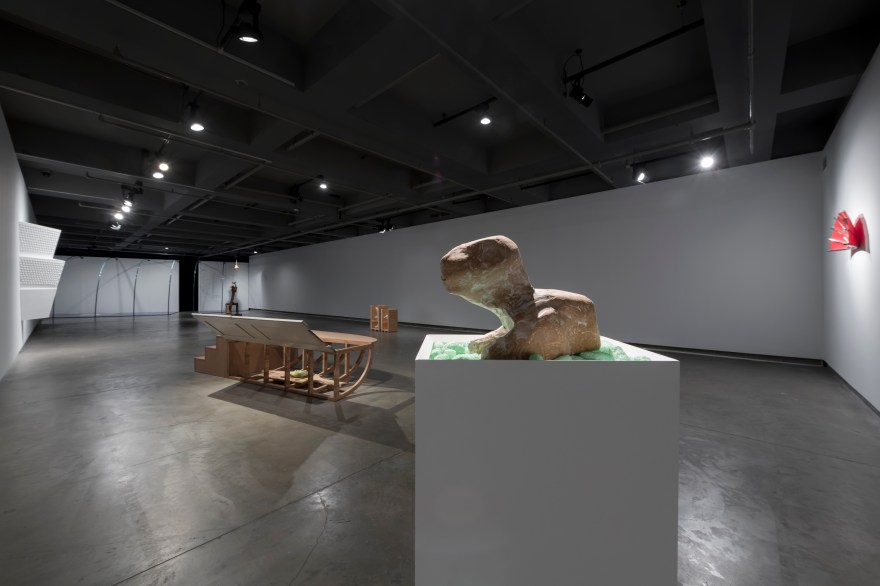
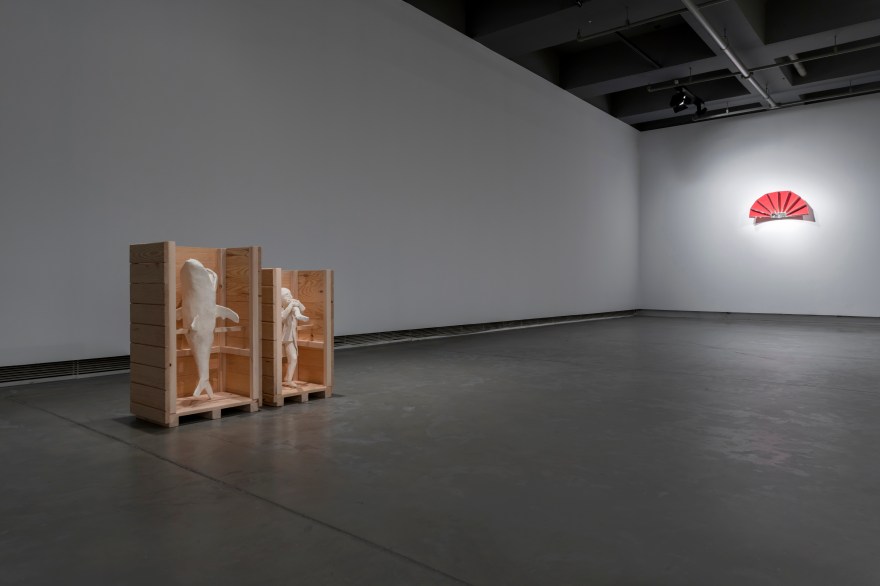
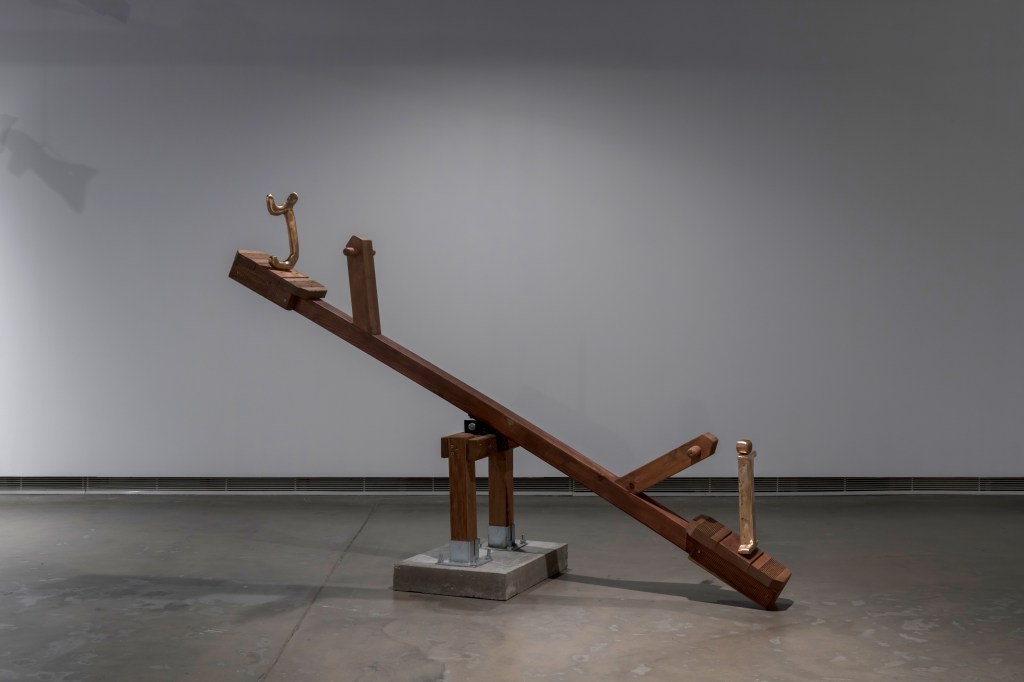
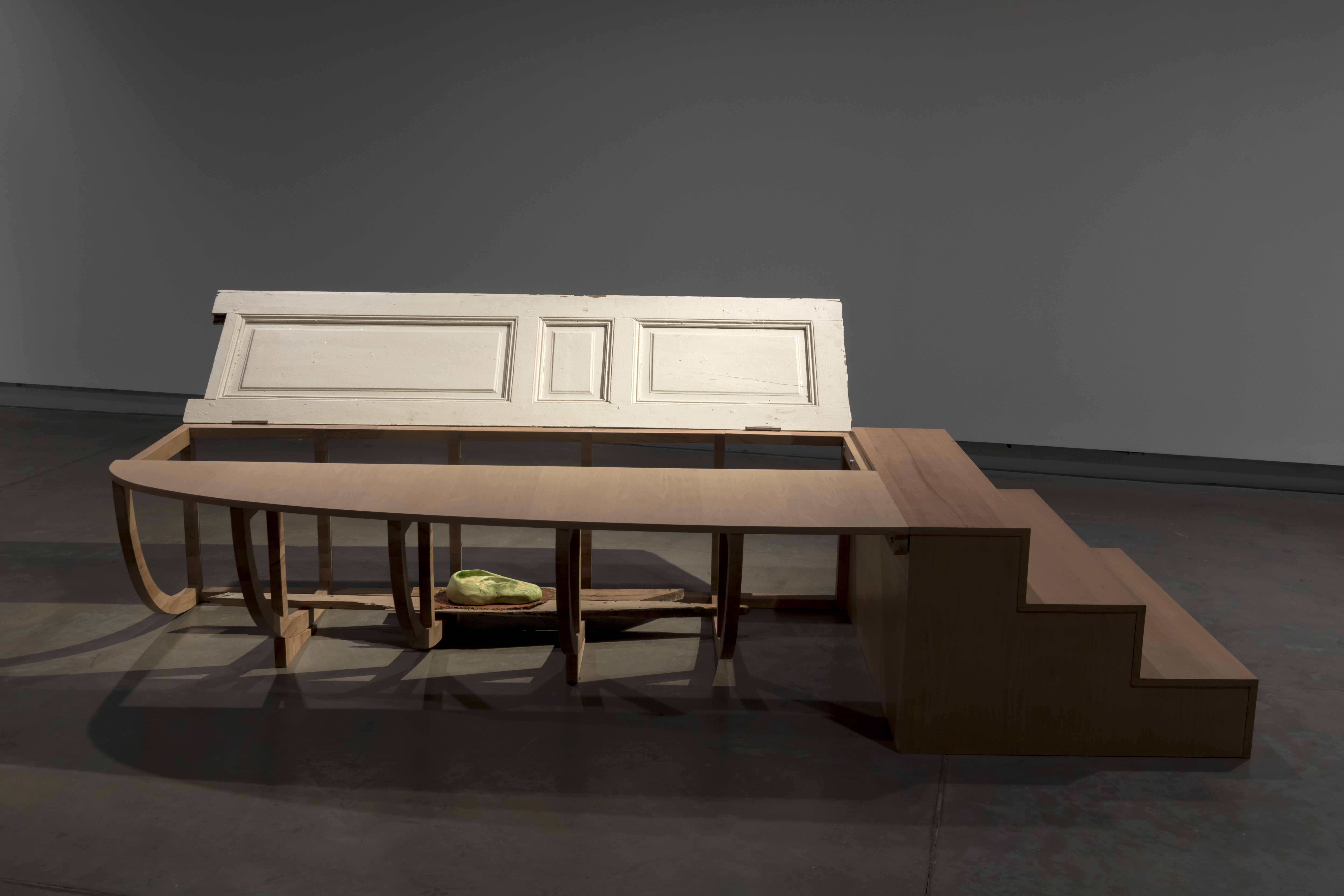
Si-Saw
“Si-Saw” is a sculpture about how we decide to represent ourselves and to which audience. It takes its inspiration from the two different spellings of Osman Hamdi bey’s name. Osman Hamdi Bey, an Ottoman aristocrat who studied in Paris for a while, used to keep diaries in French and signed his name as “Osman Hamdy” in legal documents. This was the way to spell his name in the Latin alphabet for French readers to pronounce his name correctly. In his lifetime in his homeland Turkish was written in a Turkish adaptation of the Arabic script. In 1928 with the Alphabet Reform which adapted the Latin alphabet to the phonetics of Turkish language, the phonetically assigned letter for the last letter of his name changed so in the contemporary documents he is “Osman Hamdi.”
Revolt Against the Sun

When Osman Hamdi discovered the sarcophagus of Alexander in Sidon, he was aware he was facing a great history. He deemed it his duty to take it to his hometown İstanbul. Otherwise, the European institutions who had heard of the news of the discovery might have come and claimed it theirs. So, this marvelous find was claimed by Osman Hamdi with the justification that it was found in the Ottoman province. The artifact was heavy, and it was difficult even to transport it to the port. Rumor has it that many ship captains denied boarding the sarcophagus. The rumor does not explain their reasoning, maybe because it was too heavy or they did not just want it gone. The same rumor goes on, stating Osman Hamdi said, “Listen to me and listen to me good! I represent the Ottoman State!” and tied himself to the sarcophagus, demanding to be taken to Istanbul.
The sarcophagus of Alexander is still on display in İstanbul Archeological Museums.
“Revolt Against the Sun”, also the title of the 1947 poem by Nazik Aal-Mala’ika, was one of the 9 sculptures in the exhibition Belkıs Hanım and Onur Efendi at SALT Galata.
Hamdy Attacked by The Great White
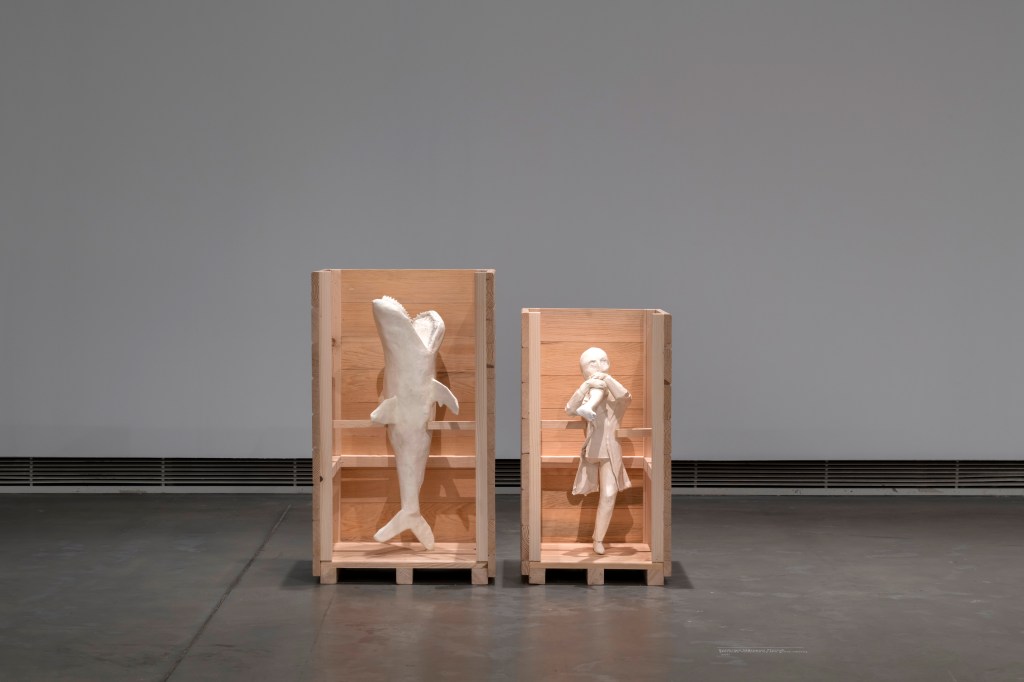
Osman Hamdi Bey, the son of an Ottoman pasha, was sent to Paris to study law but his heart was in the arts. He attended painting classes of orientalist painters. He was a self-proclaimed archeologist and he later became the founder of İstanbul Archeological museums. Since the time he was a young man, this Ottoman aristocrat and probably the prototype of the Ottoman renaissance man, was exposed to, aspired to and emulated with his western counterparts, represented in this piece with The Great White.
The kind of rivalry lasted a lifetime and led to grand and tragic circumstances. Foundation of Turkish cultural institutions, Ottoman orientalism and metaphorically taking a severed limb from the entity who had severed it and consuming it yourself because otherwise it would have been a complete loss.

How Is An Armistice Different From A Surrender?
Osman Hamdi, the son of an Ottoman pasha, was sent to Paris to study law; however his heart was in the arts. He attended classes by orientalist painters. He was also a self-proclaimed archeologist and would be the founder of İstanbul Archeological Museums. The photograph inspired “How Is An Armistice Different From A Surrender?” was taken by anthropologist/explorer Felix von Luschan, during their expedition in Mount Nemrud. Osman Hamdi and Von Luschan were photographing “interesting” looking Kurdish people, locals of the territory, as specimens of anthropological study. Von Luschan had taken this a step further, photographing individuals positioning them as subjects of an anthropometric study. Ironically, one of his subjects was Osman Hamdi, who considered himself no different than his European companion.Von Luschan would later become the owner of the very first anthropology chair at Berlin’s Frederick William University (now the Humboldt University of Berlin). But his most infamous contribution to the field was the creation of von Luschan’s chromatic scale, a method of classifying skin color using 36 glass tiles, each more opaque than the last.

Hittite Sun
“The Austrian linguist Kvergiç, when he stood before Atatürk to share his thoughts on the Turkish language, said:
– Your Excellency! The origin of all languages is Turkish. The first language is Turkish. The first person to start speaking spoke Turkish. This person, your Excellency, came out of a cave, saw the sun, squinted his eyes, looked again, and said ‘Aağ.’ ” The Actor Who Played Onur in the Connected, expressing his thoughts on speaking about emotions.
After the Hittite Sun Disc was discovered in Çorum, Alacahöyük, it established the connection between the secular Republic of Turkey and pre-Islamic civilizations of Anatolia, even becoming a symbol of Ankara. Although these sun discs are commonly associated with the Hittites, they were actually works of Hattis, an ancient Anatolian civilization. It is believed that they had ceremonial functions. ‘Hitit Güneşi’ displayed in the Belkıs Hanım and Onur Efendi Exhibition was a disassembled, chromium-plated, and reupholstered spherical sun shade found in the backyard of the studio.
 fatma belkıs